
Minnesota fishing for other favorite fish in the lakes, streams, rivers and impoundments in Minnesota
Minnesota Other  Fishing
All About Fishing
Minnesota Other Fishing

Fishing for other Musky, Tiger Musky, Northern Pike, Sauger, Longnose Gar, Bowfin and Sturgeon in Minnesota.

Minnesota offers unique fishing opportunities. Listed below find information about species of fish found in Minnesota which may not be featured in the main section of AA- Fishing.com.

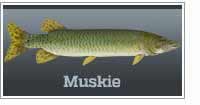
Musky - Muskellunge
Esox masquinongy
World Record: 69.9 lbs
The largest of the pike family, they are found in about half the states, primarily the northern and northeastern states. They prefer clear water with temperatures from 60 to 70 degrees. Also known as musky, muskie and great pike, they eat any fish they can catch and prefer to ambush their prey. They also eat crayfish, frogs and birds. Use large lures (salt-water sizes) and heavy line when fishing for muskellunge. They will hit lures and fresh cut bait. They are known for their speed and are exceptionally strong for short runs.

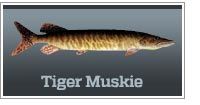
Tiger Musky - Muskellunge
Esox lucius ~ Esox masquinongy
USA Record: 51.2 lbs.
The tiger muskellunge is a cross of the musky and northern pike. Male Tiger Muskellunge are most often sterile yet some females are fertile. Tiger muskies tend to be smaller than non-hybrid muskies but grow very fast. The body is often quite silvery with brownish fins and tail, without spots but displays broken vertical markings. Like their parent, they eat any fish they can catch and prefer to ambush their prey. They also eat crayfish, frogs and birds. Use large lures and stout line when fishing for tiger muskellunge. They will hit lures and fresh cut bait. They are known for their speed and are exceptionally strong for short runs.

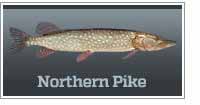
Northern Pike
Esox Lucius
World Record: 55 lbs
The northern pike is a valient fighter and prefers water temperatures from 58 to 70 degrees. Also known as jack, jackfish, great northern pike and pickerel. While they have been transplanted into most states with cold water, they are native to the northern states and are abundant in the north-eastern states. Northern pike are basically olive in color with white and/or yellow bellies. The northern pike has light-colored marking on a dark body whish is opposite that of their cousins the muskies.They are an ambushing predator that eats frogs, crayfish, birds and virtually any fish they can get into their mouth. Use spinners, fish-immitating lures, jerk-baits or cutbait and fish close to cover.

Sauger
Stizostedion canadense
World Record: 17.7 lbs.
Excellent eating fish which typically runs a bit smaller than its cousin the walleye. The sauger prefers cold and cloudy, moving water in the 60s to low 70s. They spawn in the low to mid 40s. You can tell them from a walleye by the dark spotting on the dorsal fin, darker coloring and the rough covering of the gill area. Due to their resembelance to pickerel, they are also known as gray pickerel spotfin pike, gray pike, river pike and others. When the water turns cold and other fish are hard to come by, this is the time to fish for sauger.Fish with jigs, spoons and crankbaits imitating crayfish or baitfish. Fish near the bottom and experiment with presentation action and speed.

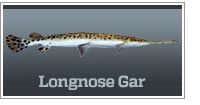
Longnose Gar
Lepisosteus osseus
World Record: 5.3 lbs
The Longnose Gar can be found in lakes and rivers and prefers quiet backwaters with temperatures ranging from 80 to 90 degrees. Also referred to as gar and garfish, It has a long, sword-like mouth loaded with sharp teeth. They are nocturnal feeders and eat most smaller fish. They can be taken on live bait, fish-imitating lures and nylon string "gobs designed to entangle in their teeth. Most longnose gar are taken by bowfishing or spear fishing. The meat is somewhat tasty but quite bony.

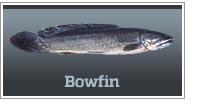
Bowfin
Amia calva
World Record: 21.5 lbs.
Found in waters around Alabama, Florida, Louisiana and Mississippi, the bowfin prefers water temperatures of the warmer climates. It has an exceptionally long dorsal fin which extends back to the tail, made of about 50 spines or rays. Near the upper tail is an eye spot. They have very sharp teeth and a nasty disposition when hooked. Handle with caution. They are most often caught on cut bait and crayfish. They put up quite a fight and are not considered good eating. The bowfin is also known as dogfish, mud pike, mudfish, grindle, swamp bass and others.

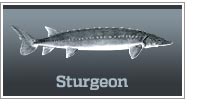
Sturgeon
Sturgeon have been captured weighing over 2,000 lbs at length in excess of 18 feet. They have been reported by divers to exist on the Columbia River up to 30-foot long. They are a prehistoric fish and have an exceptionally long life for a fish, commonly reaching sexual maturity at the age of 120 years. They are not sought for their meat, it's their egg roe which is made into caviar. They are found in major rivers feeding into the ocean and can be caught with cut bait, giant hooks, heavy weights and stout line. The larger ones can fight an angler for days and not tire out.

If you offer fishing guide services for any of these fish in Minnesota we would like to include you as a resource for our visitors. We offer a complimentary listing for your guide service on our Minnesota Fishing Guides page or you can see other options to promote your fishing guide services in Minnesota by visiting our Advertising opportunities section.

MN Other Fishing - All About Fishing for Musky, Tiger Musky, Northern Pike, Sauger, Longnose Gar, Bowfin, Sturgeon and other fish in Minnesota.

 
Photos

Minnesota Lakes

When fishing for these fish in Minnesota, you are likely to find them in some of the larger lakes in Minnesota including Lake of the Woods, Red Lake, Kabetogama Lake, Mille Lacs Lake, Lac Qui Parle Lake, Swan Lake, Lake Minnetonka, Lake Pepin, Lake Vermilion and Leech Lake plus smaller lakes as well as in ponds and rivers throughout MN. Look here for a detailed list of Minnesota fishing lakes.


Resources


Fishing in Guatemala

012208 Copyright AA Fishing