
Most Popular Bass Lures 2024


Bass fishing lures by lure type.
By Rick Seaman
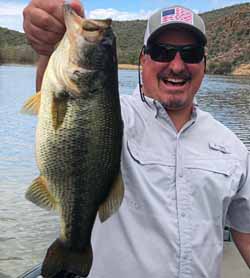
Catch more bass in 2024. Choosing the right bass lure can make or break your day. But before you get too caught up in lure choice, it is important to figure out where the bass are hiding. Bass lures are designed to imitate a food source of the bass. They are also designed to be fished in specific conditions. When you find the lure that mimics the food source, that can be productively fished where you located the bass - you have a winning combination.
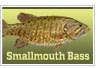
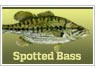
When bass are holding deep in cover, you need a lure that can get into and back out of the cover without getting hung up. At the same time it must appeal to the appetite of the bass. The following is a list of bass lures by category, when and where to fish them, and tips for making your casts more productive.
Topwater Lures
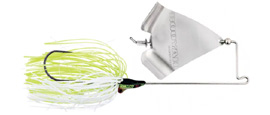
BUZZBAITS
Effective depth:
Surface
Recommended line test:
10# to 17#
Ideal conditions:
Use buzzbaits when fish are feeding shallow in areas with thick cover. Cast and retrieve buzzbait over and around cover. Retrieve on the surface and vary speed with mini-pauses. Sample shown is a Booyah Squelcher Buzzbait, available at Bass Pro Shops®.
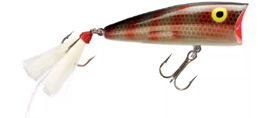
POPPERS
Effective depth:
Surface
Recommended line test:
10# to 14#
Ideal conditions:
Use popper, topwater baits to draw fish out of cover. Cast near cover and pause for 10 seconds before moving. Move the popper with a snap of the rod tip, then pause again. Sample shown is a Rebel Pop-R Plus®, available at Cabela's®.
PROPELLER BAITS
Effective depth:
Surface
Recommended line test:
10# to 17#
Ideal conditions:
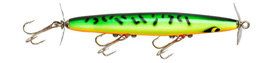
Use noisy propeller baits to attract attention on the surface any time bass are shallow. The noise helps in stained or dirty water and brings out the protective nature in bass. Sample shown is a Smithwick Devil's Horse® available at Sportsman's Warehouse®.
Stickbaits
STICKBAITS
Effective depth:
Surface to 3 feet
Recommended line test:
8# to 12#
Ideal conditions:
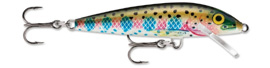
Use stickbaits on the surface any time bass are shallow in fifty degree water or warmer. Work deeper when the water is cold or when bass are inactive. The bait appears to be an easy target, a wounded fish - easy pickins. Work it slow and tease them into taking it, even if they are not really hungry. Sample shown is a Rapala Original Floater®, available at Discount Tackle®.
JERKBAITS
Effective depth:
1' to 8'
Recommended line test:
8# to 14#
Ideal conditions:
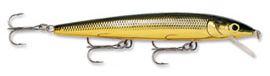
Use jerkbaits when fish are feeding shallow in areas with little cover and clear, cold water. Cast to points, structure or immediately outside the cover to draw the fish out. Pause. Crank hard for several turns and let the bait stop. Jerk, jerk, pause and then reel in the slack - repeat. Sample shown is a Rapala Husky Jerk®, available at Frank's Great Outdoors.
Crankbaits
SHALLOW, LIPLESS CRANKBAITS
Effective depth:
1' to 6'
Recommended line test:
8# to 14#
Ideal conditions:
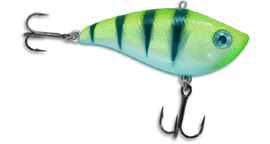
Use shallow-running crankbaits when fish are feeding shallow in areas with limited cover. Sample shown is a Rippin' Shad®, available at Northland Tackle.
SUSPENDING CRANKBAITS
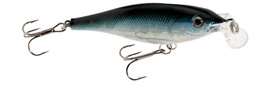
Effective depth:
Various to 12'
Recommended line test:
8# to 14#
Ideal conditions:
Suspending crankbaits allow you to dive the lure to a desired depth, and pause to tease big bass into attacking. Once desired depth is achieved they can be cranked slowly and maintain approximate depth. Sample shown is a Cabela's Shallow Suspending Shad®, available at Cabela's®.
DEEP-DIVING CRANKBAITS
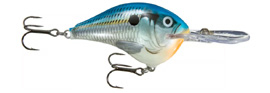
Effective depth:
Down to 20' or more
Recommended line test:
8# to 14#
Ideal conditions:
Use deep-diving crankbaits when the fish are deeper than 8 to 10 feet, particularly when they are feeding, or otherwise aggressive. Sample shown is a Rapala DT Series Crankbait® available at Bass Pro Shops®.
Spinnerbaits
TANDEM BLADE SPINNERBAITS
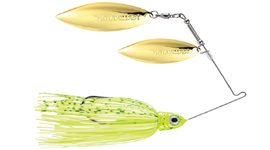
Effective depth:
1' to 15'
Recommended line test:
12# to 17#
Ideal conditions:
Use spinnerbaits when fish are feeding shallow in areas with thick cover. Vary retrieve speed to control depth. Pause to let the lure fall to deeper depths. Watch for hits on the fall. Relatively weedless as long as the bait is moving. Sample shown is a Terminator P1 Pro Series Double Willow Spinnerbait, available at Tackle Warehouse®.
Plastic Worms
TEXAS-STYLE WORMS
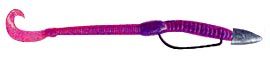
Effective depth:
Any depth
Recommended line test:
8# to 17#
Ideal conditions:
The key to the Texas Rig Worm is the hook is buried into the body of the soft plastic worm. It is weedless and can be worked through and over most cover without getting hung up. Twitch it, crawl it, pause it - give it life to tease a bass into biting! See an illustrated guide to rigging the plastic worm, here.
JIG HEAD WORMS
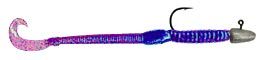
Effective depth:
Any depth
Recommended line test:
10# to 17#
Ideal conditions:
Use a jig head worm in open areas away from brush, trees or other cover that would snag on the open-hook jig head.
DOUBLE-HOOK WORMS
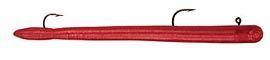
Effective depth:
Any depth
Recommended line test:
8# to 17#
Ideal conditions:
Use a double-hook worm any time the fish are biting short or soft biting. Best in open areas away from brush, trees or other cover that would snag on the open-hooks. Sample shown is a Westy's Worm®.
Jigs
WEEDLESS JIGS
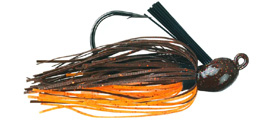
Effective depth:
Any depth
Recommended line test:
10# to 20#
Ideal conditions:
Use different plastics to create a variety of looks and fall rates. When bass are sluggish or you just want to go hawg hunting, this a great bait. Looks and feels natural to the bass. Work it slow in cover. Great for flippin! Sample shown is a Strike King Bitsy Flip Jig® available at Bass Pro Shops®.
PLASTIC SKIRT & TAIL JIGS
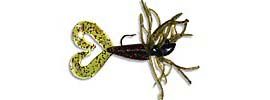
Effective depth:
Any depth
Recommended line test:
8# to 20#
Ideal conditions:
When bass are feeding at intermediate depths, the spider jig, which imitates a crawfish can be the ideal bait. Swim it, crawl it, pause it - make it seem real and the bass can't resist. Sample shown is a Canyon Lures Spider Jig.
Spoons
SLAB JIGGING SPOONS

Effective depth:
5' to 55'
Recommended line test:
10# to 65#
Ideal conditions:
When bass are feeding on schools of shad or other bait fish, use the flutter spoon to imitate injured bait fish falling from the school. Excellent for fall fishing as waters turn cold. Sample shown is a Hopkins NO EQL Spoon, available at Tackle Warehouse®.
Create Your Own Bass Lures Fishing Video.
Build your own bass fishing lures for spring with custom colors and bodies by BuildYourOwnBaits.com. Custom order exactly what you want.
Bass fishing lakes by state.