



Payette Lake Fishing Report


Boat and Bank Fishing
By Rick Seaman
Last updated on .
Current, General Fishing Conditions Report - For All Species: ★★★★★
Fishing Reports
Popular Fish Species Payette Lake, ID
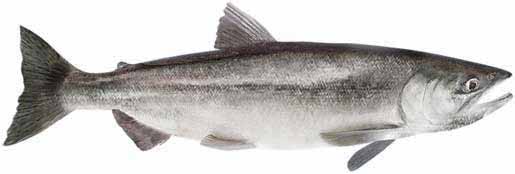
Fishing Report: Kokanee Salmon
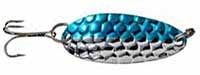
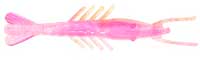

Current Fishing Report: Good
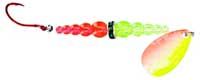
Downriggers or leaded line are the two primary methods for catching kokanee here, while trolling. Kokanee school up and hang out over deep water, usually above some type of structure. Anglers are catching a few kokanee in the 20" range, but the average is closer to 14". Worm harnesses and wedding ring spinner setups are popular when trolled behind a 4" dodger. Locals tip these baits with shoepeg white corn, PowerBait, Z-Man Scented ShrimpZ, or live nightcrawlers to helps attract bites. Trolling these baits between 1.6 and 2.2 mph is typically a good speed for catching these kokes.
WINTER. Now, and when ice fishing later in Winter, kokanee are typically caught from 12 to 30 feet deep. Schools often suspend under the ice in, or just below, the thermocline. On occasion they move deeper. Ice jigs, spoons, PowerBait, ShrimpZ, shoepeg corn and maggots are popular ice fishing baits here.
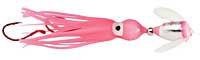
Kokanee salmon spend the vast majority of their life suspended in open water.. Currently the use of new technology is helping anglers catch more kokanee. Forward-facing, and side scanning, sonar is assisting anglers in locating and catching these roaming salmon. Catch rates have improved, especially when they hold in deeper water. Once located, these tasty salmon are being caught in good numbers while trolling, casting or jigging. Dodgers, snubbers, hoochies and downriggers are helping anglers catch more fish. Trolling speeds from 0.9 to 1.5 mph are catching the most fish.
- Deep basin off North Beach
- Open water near the Narrows
- Main basin off Ponderosa State Park
- Deep water near the Payette River mouth
- Central lake basin east of Sylvan Beach
SPRING. In early Spring kokanee school in 20 to 40 feet of water. During late Spring, they typically move closer to the surface where phytoplankton blooms become more abundant, providing a rich food source. Kokanee will feed heavily on this plankton in 15 to 30 feet of water, until surface temperatures reach the high 50's. Kokanee stage shallower, in tributary mouths, upper river arms, and warmer, food-rich pockets as they begin to move toward spawning reaches. Along the upper parts of the north and central basins, are hot spots in Spring. Casting or trolling spinners, spoons, or kokanee rigs works well during this period.
- Open water off Ponderosa State Park
- The Narrows
- Payette River mouth
- Main basin near North Beach
- Central lake over suspended schools
SUMMER. July and August are reportedly the prime months to catch kokanee here at Payette Lake. Downriggers or leaded line are the two primary methods for catching kokanee here, while trolling. Kokanee school up and hang out in 15 to 40 feet deep, over deeper water, usually above some form of structure. The ideal water temperature is mid to low 50's. Identify the depth for that temperature range, and the kokanee will be hanging out in that depth range. They are often caught in 15 to 20 feet of water, early mornings and evenings around flats and points. Worm harnesses and wedding ring spinner setups are popular when trolled behind a 4" dodger. Local anglers are tipping these baits with shoepeg white corn, PowerBait, Z-Man Scented ShrimpZ, or live nightcrawlers to helps attract bites. 15 to 30 feet deep is the ideal depth to work in these warmer months. Trolling these baits between 1.2 mph and 2.2 mph is a good speed.
- Deep thermocline off Ponderosa State Park
- Open water in the central basin
- The Narrows over suspended schools
- Deep basin near North Beach
- Main-lake basin east of Sylvan Beach
FALL. In early Fall, kokanee gather in the southern section of the main basin near McCall and Mile High Marina. Later they migrate towards spawning grounds, along the shoreline of the lake, or upstream around tributaries. In the weeks prior to the spawn, they gathered in sizeable schools near the mouths of these inflows. The spawn typically occurs in mid to late September or early October. Kokanee fishing is good from 10 to 20 feet deep. Casting or trolling spinners, spoons, or kokanee rigs works well during the spawn. Once late Fall arrives, these schools will move out to deeper structure in the basin, where they are caught in 10 to 30 feet of water, often suspending above structure.
- North Fork Payette River inlet
- Upper lake staging areas
- Shallow water near spawning tributaries
- The Narrows
- North end of Payette Lake
Fishing Report: Lake Trout
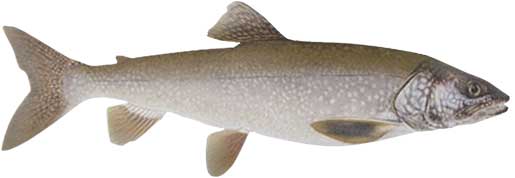
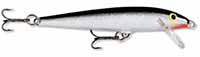
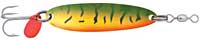
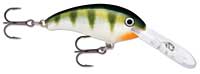
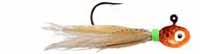
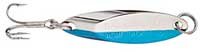
Current Fishing Report: Good To Very Good
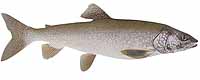
Payette Lake is reported to have the biggest lake trout in the state, for the past decade or more. July and August are the best months to catch the trophy fish. Lake trout feed on small fish, so lures imitating baitfish, sunfish or small trout are good choices. Other choices include nightcrawlers or Berkeley Power Crawlers, fished on drop-shot rigs. Flashy spoons can be fished at any depth, either jigging, trolling or cast and retrieve. For big lakers, use larger baits.
WINTER. Ice fishing for lakers was good last year with quite a few monster lake trout caught. Favoring water temperatures in the 40's, lake trout find areas to their liking in 60 to 200 feet of water, and tend to stay there throughout the cold months. Learning these areas before the lake ices over can get you into some of the better area for ice fishing. Patient anglers willing to work slowly can catch some nice lake trout through the ice.
- Deep basin off Ponderosa State Park
- Steep drop-offs near the Narrows
- Deep water near North Beach
- Main basin east of Sylvan Beach
- Rocky ledges near the Payette River channel
SPRING. After ice out, trolling with leaded line or downriggers, or vertical jigging with spoons and jigs, completes the cold-water season in 80 to 100 feet of water, or deeper. Spring weather finds lake trout, along with baitfish, into around 40 to 100 feet of water. Because they are somewhat shallow, Spring is an ideal time to catch big lakers. They are caught in areas of the lake which have deep water, next to shallower, feeding spots. Jigs and heavy spoons are catching the majority of these big lakers. Slow trolling with leaded line or downriggers allows small crankbaits and spinners to be worked in deeper water, which also produces some nice fish. Later in Spring they typically drop into deeper water.
- Rocky points near the Narrows
- Deep shoreline breaks off Ponderosa State Park
- North Beach drop-offs
- Rocky structure along the eastern shoreline
- Main-lake ledges near the Payette River mouth
SUMMER. Summer heat drives lake trout deeper, generally below the thermocline in 50 to 120 feet deep. Early and late in the day, lakers may feed shallow. Generally, lake trout prefer to stay deep, below the thermocline, throughout Summer. They look for depth variations like ditches, channels, humps, points and ledges, but are often caught in the deeper water around this structure. Heavy spoons and jigs, as well as very slow trolling, with leaded line or downriggers, produce many of the lakers being caught during Summer. In late summer concentrate on channel edges, troughs, and main lake humps.
- Deep basin off Ponderosa State Park
- Submerged humps in the central basin
- Steep breaks near the Narrows
- Deep water off North Beach
- Rocky ledges along the eastern shoreline
FALL. Lake trout are returning to relatively shallow water, as Fall weather cools the lake. They spawn in the Fall, and for a few weeks can typically be found 25 to 80 feet deep on points, flats and humps that have a rocky bottom. Lake trout feed on small fish, so lures imitating baitfish, sunfish, perch or small trout are good choices. Cloudy days, early mornings and early evenings are the best time to catch big lakers. Later in Fall they return to 60 to 100 feet deep, or deeper. Spoons, jigged vertically within the target depth can entice bites along depth changes. Trolling with spoons, brightly-colored jerkbaits, and spinners with a variety of rigging methods to get these lures to run deep. For big lakers, use larger baits.
- Rocky points near the Narrows
- Deep ledges off Ponderosa State Park
- North Beach drop-offs
- Main basin east of Sylvan Beach
- Rock piles near the Payette River mouth
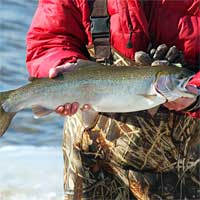
Fishing Report: Rainbow Trout
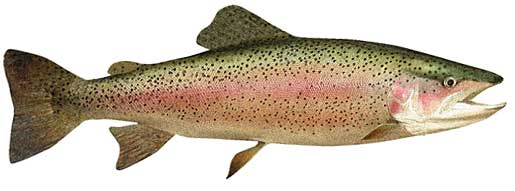
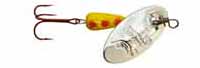
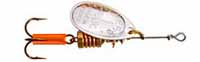
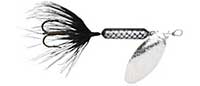
Current Fishing Report: Good
The use of new technology is helping anglers catch more rainbow trout. Forward-facing, and side scanning, sonar is currently the best way to locate trout, especially when they school in deep water. Rainbows are caught trolling, casting or jigging, once located on these sophisticated fish finders.
Idaho Fish and Game regularly stocks rainbows in Payette Lake to maintain a healthy fishery for anglers. Many are caught trolling, but anglers are also catching them by casting and jigging.
WINTER. Now that Winter is here, jigging spoons, and jigs tipped with bait, are catching nice limits of rainbows out of 10 to 40 feet of water. These baits work well around the old river channels, the shoreline points along Ponderosa State Park, Legacy Park, the shallow flats around Mile High Marina area. Trolling with leaded line or downriggers, or vertical jigging with spoons and jigs, are the best approach during the cold-water season. Slowly worked offerings are more likely to attract bites in this cold water. Ice fishing season begins in January.
- Payette River mouth
- Ponderosa State Park shoreline
- North Beach drop-offs
- The Narrows
- Rocky shoreline near Sylvan Beach
SPRING. As water begins to warm in early Spring, rainbow trout move from their late winter holding areas to shallow, warmer water 6 to 40 feet deep. Shallow flats and points along Ponderosa State Park and Legacy Park, and the mouth of the North Fork Payette River, are good choices after ice out. A good number of rainbows are typically caught from mid morning to late afternoon, during the warmest water of the day. Shallow flats and rocky structure are quick to warm in the afternoon sun. A wide variety of small spinners, spoons and bait are catching most of the fish.
- Payette River inlet
- Shoreline near Ponderosa State Park
- Rocky points around the Narrows
- North Beach shallows
- Gravel shorelines near Sylvan Beach
SUMMER. Once Summer is here to stay, the warmer water drives rainbow deeper, 10 to 35 feet deep, often deeper. Trolling the main basin with spoons, spinners and crankbaits, using downriggers or leaded line, and drift fishing with bait, are currently the most productive methods. Following drop-offs into deeper water, along structure or creek channels, is a major key to getting bites. Anglers fishing from the bank are using nightcrawlers or Berkley PowerBait, with heavy weights on a Carolina rig, to get baits in deeper water.
- Deep water off Ponderosa State Park
- The Narrows
- Open water near North Beach
- Thermocline in the central basin
- Main-lake points along the eastern shoreline
FALL. Cooling water temperatures in the shallows, draw rainbow trout out of deeper Summer depths. Anglers catch them 6 to 25 feet deep on rocky banks, wind-blown points, rocky structure, humps, and anywhere baitfish are gathering. Once they had a full summer to grow, there are some nice size rainbow to be caught. Small spinners, spoons, jigs, miniature crankbaits and swimbaits are good choices, as are salmon eggs and prepared baits. Later in Autumn, they move into 10 to 50 feet of water.
- Payette River mouth
- Rocky shoreline near Ponderosa State Park
- North Beach points
- The Narrows
- Gravel shorelines near Sylvan Beach
Lake & Fishing Video
Fishing tips for boat or bank fishing
Fish species to fish for...
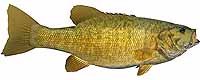
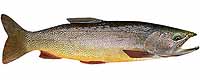
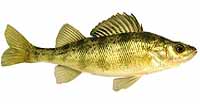
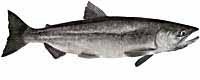
Guide to fishing for smallmouth bass, rainbow trout, cutthroat trout, lake trout, yellow perch and kokanee salmon at Payette Lake in Idaho.
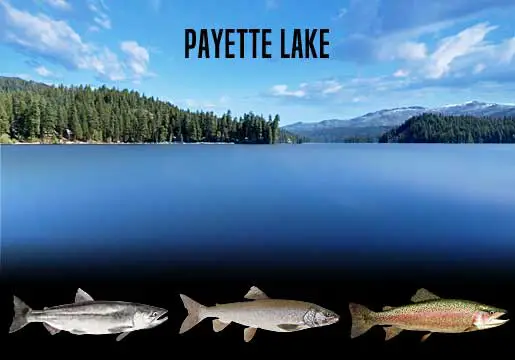
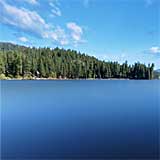
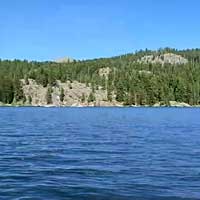 Payette Lake is a 5,000-acre lake with over 20 miles of shoreline, some of which is accessible for fishing from the bank. Anglers favorites include rainbow trout, cutthroat trout, lake trout and kokanee salmon. Quality smallmouth fishing is also available.
Primary fish species to catch
Click images for fishing tips and details about each species.
Today's Weather & Forecast
Fishing Boat Rentals
Click here for fishing boat rentals.
Public Boat Launch Ramps & Landings
Click here for boat ramps.
Marinas
Click here for marinas.
Fishing License
Click here for a Idaho Fishing License.
Map - Fishing & Access
 Rick Seaman is a fishing enthusiast with over five decades of fishing experience, a retired tournament fisherman, author of numerous published articles on fishing, and co-author of the book "Bass Fishing - It's not WHAT you throw, It's WHERE you throw it".
 Contact Information
Mile High Marina
1300 E. Lake Street
McCall, Idaho 83638
208 634-8605
Fishing lakes in each state


IDAHO

Fishing for rainbow trout, cutthroat trout, lake trout and kokanee salmon in west-central ID.
